Thursday, February 7, 2013

Fire From the Sky: What Israel's Syrian Strike Means to the World; Part 2


The bombing has become one of the most discussed events lately, as the first instance of foreign military intervention within the civil war. Every group seems to have their own opinion on what happened and what it means. On the ground, the view of the situation is grim.  Citizens have stated that they believe the Israeli government and the Assad regime are in fact in collaboration, trying to sway the people’s aggression away from Assad. Whether or not this is true, the strategy is clearly not working, as the people have remained as hostile as ever.

On the other hand, Israel has expressed the opinion that it is operating as the final line of defense between terror organization Hezbollah and the rest of the world. Syria has in the past openly supported Hezbollah, arming them with Russian made weapons and supporting them in other logistical manners. The primary fear is that Hezbollah will be supplied with chemical weapons, and there is some significant possibility that they have already acquired and used chemical weapons on a small scale, according to some citizen accounts.

The international community has responded with a dizzying array of reactions, from Russia and Iran’s anger and calls for accountability to the U.S. statement in support of the Israeli decision. While it seems currently unlikely that there will be any sort of a violent reaction, this event may be the catalyst for international intervention in the Syrian civil war. The event has brought renewed calls to aid the Free Syrian Army and for the establishment of a no fly zone, which were previously thought to be too dangerous.

Whatever the final impacts, it is clear that the civil war is coming to a turn. The international community has been paying careful attention, and seems to be coming to the edge of an ultimatum.

WE

Wednesday, February 6, 2013

Fire From the Sky: What Israel's Syrian Strike Means to the World


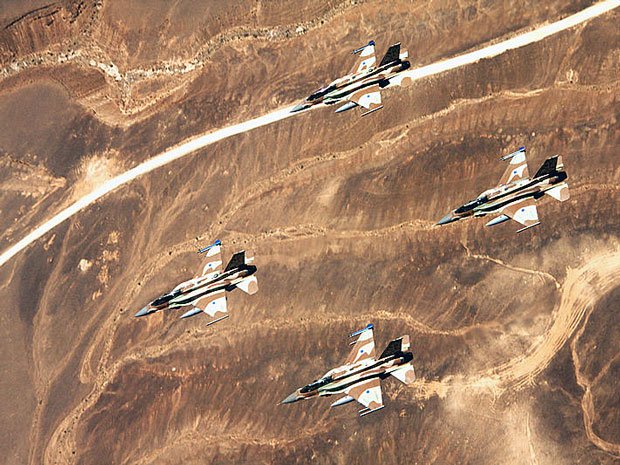
The Israeli government has long been one of the boldest and most proactive in the world. Surrounded by countries that are ideologically their opposites, and frequently opposed to the very existence of the Israel state, it is easy to understand their tension. Their most recent military activity, however, has fallen under a different sort of scrutiny than the usual. On Wednesday, January 30th, Israeli fighter jets roared over Syrian airspace and launched rockets at a target. What exactly that target was is now a subject of international debate with Syria claiming it was a research facility and Israel (backed by the United States) claiming it was a shipment of ground to air missiles headed for the Syrian backed terror organization Hezbollah.

                But why should anybody else care what exactly the target was? And what do the people on the ground believe? This will be explored in the following series of articles concerning the impacts of the Israeli Strike.

With Assad feeling extraordinary pressure as the Syrian Free army makes increased progress, it does not seem so far-fetched that Assad would welcome even a violent diversion. He has made calls to the people to rally against Israel, and to put down their anti-government arms. Whether or not this is true, the situation has also revealed much about the Syrian position. Their response has been a protest against the “Zionist – US collaboration”, with promises of support from Iran and Hezbollah. They, Russia and the Arab League are calling it an unprovoked attack and a violation of both Syrian sovereignty and the 1971 disengagement between the two powers (though this has been violated on both sides repeatedly). It does not seem likely, however, at the moment, that there will be a violent reaction to the strike, even with its allies.

WE

Monday, January 28, 2013

Immigration Reform: The Silver Bullet, Or Another Dead End?


The issue of immigration is one that has met an extraordinary number of forces on its journey to solution, and it’s not done yet. It does, however, seem to be coming to a checkpoint on the road. One of the greatest roadblocks to progress so far has been the lack of a consensus on what the problem is. Is it more important to stop people getting in? Or to remove those already here? Or to monitor business’ hiring practices? Different states have radically different positions on not only what the largest problem is, but which of these should in fact be illegal.

The dialogue over these issues seems to have finally borne some fruit, in the form of a bill which is to be announced today, around 3. The bill attempts to provide space for increased border security and business oversight, rather like other proposed and failed bills, with two important additions: it provides a significant path to documentation for those workers already in the country, and it has significant GOP support.


                The support from the GOP has seemed to come from their desire to gain leverage with the growing Latino population, who were key parts of the GOP losses in the last election. And while they are certainly making, from the perspective of their past calls for action, a compromise, they are also responding to the rhetoric of people such as Sen. Marco Rubio (FL), who stated that the current system gives “De Facto amnesty”, since the government is in the vast majority of cases not able to respond at all. The public reaction to the bill will soon be known, but according to the details of the bill from the aides who spoke to Bloomberg news, it is believed to represent the desires of both border states and agricultural states far better than previous bills.

Keep Reading for Further Updates!

WE


Wednesday, December 26, 2012

Egyptian Take Two: The Ins and Outs of the Struggle for a Constitution

Members of Egypt's Constituent Assembly


The Egyptian crisis has reached another turning point, with the second draft of their constitution. The first draft failed to lead the country for more than a few months. This second one however, may be no better than the first. The draft was highly backed by the Islamic Brotherhood, the organization that focuses the immense influence of Islam in Egypt. While the country is predominantly Muslim, the population has become increasingly aware of the pressure under which minorities have been placed. Specifically women and Christians (about 10% of the population), both of whom were highly oppressed under the old regime controlled by the Islamic Brotherhood; and while this draft appears to have gained popular support, it is the support of a drowning man for any air, no matter how stale.


The frustration of the people has become apparent in almost every measurable way. At polling booths across the nation attendance was phenomenally low, from sparse to actually empty at certain times. Upon questioning, the average citizens appear to have resigned themselves to the passage of the draft. Whatever the details, Egypt is decomposing rapidly without a constitution, and the attitude seems to be anything is better then nothing at this point.

The common people are not the only ones to have voiced discontent with the current government trends. Of the original seventeen highest cabinet officials originally elected, seven have resigned, giving a plethora of reasons from discontent with the president and parliament to simply finding politics unfit for their skills. Whatever the reasons, such a national decomposition does not bode well for the Egyptian people, either now or later. The largest question may be however, if the people are not content, will they be able to make their voices heard, or will they once again resort to violent protests?
While Egypt appears to have made significant strides in gaining stability, it is also acting as a model for the other recently liberated country in the region, Libya. For the connection between Egyptian Constitution, Libyan riots, and the American people, keep reading!


WE
Sources:  http://www.reuters.com/article/2012/12/26/us-egypt-politics-idUSBRE8BL03X20121226
http://abcnews.go.com/International/wireStory/egypts-government-sets-priorities-charter-18066325#.UNufWI59nww
http://worldnews.nbcnews.com/_news/2012/11/29/15545841-crisis-tests-egyptians-constitution?lite

Thursday, December 13, 2012

And We're Falling Off Which Cliff?


So what about that Fiscal Cliff?

If your anything like the millions of Americans who listen to public radio or can’t seem to tear themselves away from the television, you’ve probably heard the phrase “fiscal cliff” more than a few times, sometimes praised and frequently condemned. But what exactly is the fiscal cliff?

Projected budget analysis graph. Alternate scenario is
with extension of tax cuts and without program cuts.
                The phrase comes from the shape of the graph which shows the government’s net revenue vs. time. The current prediction, with the end of the Bush tax cuts, a planned increase in tax rates, and the beginning of the program reductions detailed in the Budget Control Act of 2011. These reductions are intended to be widely applied but not to cut too deep, with shallow cuts to nearly every department (a few are immune; veterans affairs, medicare, etc.)

                There is much discussion involving whether or not reaching the fiscal cliff is in fact the safest route for the country. This debate stems from the division on economic theory found in Congress, commonly understood through something called Keynesian theory. John Keynes was an economist who in 1936 published The General Theory of Employment, Interest, and Money. Keynesians argue that in times of recession the government should increase spending, taking a deficit in order to stimulate the economy. More projects, more employment, and more benefits will then push the economy more quickly into surplus.

                Non-Keynesian economists argue that recessions are a time for the government to decrease spending. In a more common sense argument, they argue that the government is the structural backbone of the economy, and in lean times should tighten its belt to control the damage of the recession.

                The true right answer to this question is probably a combination of the two. However, which one will be applied in the coming months and years to America’s economy remains to be seen. Democrats, who favor Keynesianism, currently control both the Senate and the White House, while the non-Keynesian Republicans control the House.

WE

Monday, July 9, 2012

Mexico: The Cost for Freedom

Name this country: An army of cold faced gangsters marching through the desert, leaving a path of drug addictions and death in their wake, and destroying the hopes of the weak and cowardly government. 

If the first answer into your head was the Republic of Mexico, then you are among the majority of American people. Mexico’s reputation is the curious subject of a kind of media justice with eyes wide to events but blind to perspective.

Reputation. What is it? And how does it come about? We like to think that our national opinions are based on solid facts and hard evidence, but it seems that, ironically, the evidence states otherwise; and in a world where information and semi-anonymous transactions are the name of the game, a serious reputation drop creates casualties.


Mexico. Perhaps one of the most reputation dependent countries in the world with 20 million visitors a year, reputation is a great part of the lifeblood of the Mexican economy. So now that the Mexican reputation has become tied to warring cartels, violent killings and drug wars, it may be time to examine the truth behind these allegations and the real impacts on your visit to what is still the most popular international tourist destination on the west coast.

So why has the Mexican reputation taken such a steep dive in the last few years? The answers to this question and a more precise presentation of geographical perspective will hopefully be understood through the next three articles detailing the Epic Times take on the issue.

WE

Monday, June 11, 2012

The French Report

                 France.  What is the first word that jumps to your mind? Chances are, its Paris or Love. Not elections.
Participants at French polling station
                However, one of the most significant events to occur in France this year is the election which brought an end to Nicolas Sarkozy’s austere policy plans and ushered in Francois Hollande, running as a socialist; and while this may not immediately seem important to a non-French citizen, this event has global significance. These intersections between us and them will be outlined over the series of a few articles, hopefully explaining:

WHY YOU CARE ABOUT FRENCH ELECTIONS


                France has for many years been a key player in the political and economic worlds, with both a significant GDP and influence in the Eurozone and EU that could not be ignored. However, with the situation overseas growing increasingly dire the country had begun to lose steam and influence, and the austere policies likely in their future seemed to guarantee no refreshment.
                Interestingly, it may be that the more open purse of a socialistic administration will be the saving grace. While governments are generally not the most efficient employers, there are occasions where, historically, they have done some good. While this opinion is not without contention (namely, Roosevelt and the New Deal), it is also clear in this time that there is a problem which no amount of reservation can seem to help.
                So what if this strategy works? France is not the only country suffering, and with few uncontested options available, there are many in Washington who would love to hold a successful example of a socialistic strategy up in the spotlight. With a balance as delicate as our current alignments, there is no doubt that this is significant. After all, it is not only children who play games of follow the leader.


WE